Who is Trapdoor Trader?
1276 words·6 mins
Every day, I went to my job and quietly fantasized about being fired.
I had a cinematic scene playing in my mind: They would realize their terrible mistake. They would call me back. My boss would practically beg.
“We can’t do this without you.”
And I would calmly reply, “Well… can you pay me three times what you used to? And perhaps a little more? My feelings are still hurt.”
It was a satisfying fantasy. But we should be careful what we wish for. Wishes sometimes come true—occasionally when the timing is right, and occasionally when it is not.
When that final call with my boss came, it did not unfold as I had imagined. There was no dramatic realization of my importance. My boss explained that they were very sorry. The economy was difficult. They appreciated everything I had done, but the company needed to trim expenses.
What surprised me was my reaction.
Instead of panic, I felt joy. Relief. A quiet sense of release.
I was genuinely grateful for what I had gained from the job: the grit that came from dealing with difficult personalities, the discipline of carrying too much while keeping a steady head, and an ability to derive joy from appreciating the process of learning about my job, even when others were not giving me good feedback. These are all characteristics that make me a better trader.
But beneath that gratitude was a simple truth:
I no longer wanted to spend a third of my life advancing someone else’s goals.
I could afford to feel relieved because the timing was good. I had savings to cushion the fall, but something else happened too. My mindset shifted, like a key sliding smoothly into a lock and opening a door beyond which there was clarity.
My being-fired fantasy wasn’t really about revenge. It was about validation—about someone else finally recognizing my value. The key in the lock was finding the courage to stop waiting for that recognition. If my worth was going to be acknowledged, it would have to begin with me.
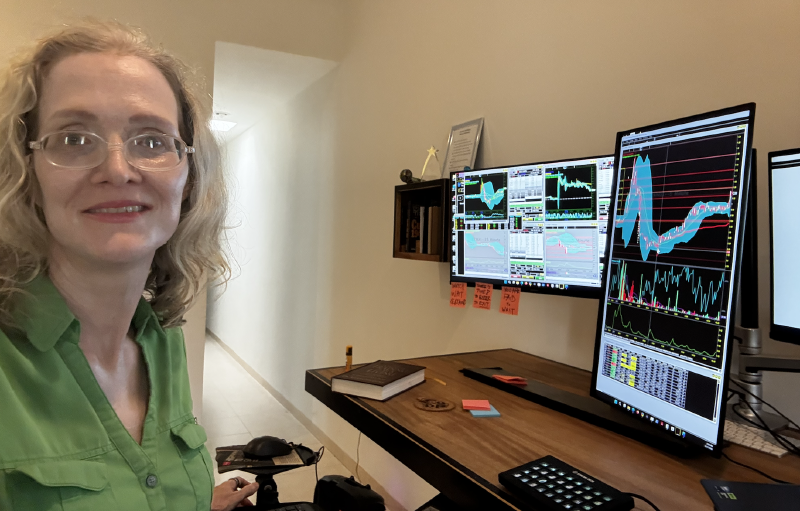
Trading had entered the picture before I lost my job. I was already swing-trading investments in my 401(k), had an independent Roth IRA at Robinhood, and was earning returns that made an ordinary savings account feel inadequate by comparison. I had also begun reading books about markets and trading.
So, the morning after that phone call, I started working on a business plan—and I began calling myself a trader.
That was my transition. It does not need to be yours.
In fact, for many people, beginning part-time is the wiser path.
You might trade before work, during a carefully defined morning window, or with a small account while continuing to earn a dependable salary. You might spend months studying, paper-trading, reviewing charts, and collecting evidence about your performance before risking meaningful capital. You might discover that trading works best as a second income stream rather than as your full-time occupation.
None of that makes you less serious.
Keeping your job while you learn can remove an enormous burden from the process. When your rent, groceries, and health insurance do not depend on today’s trading results, you are less likely to force trades, chase losses, or demand that the market pay you on your schedule.
Part-time trading is not merely a timid version of full-time trading. Done deliberately, it can be an apprenticeship.
Money matters. Time matters. Access to the right tools and education matters. But those are not the only barriers between wanting to trade and becoming a trader.
Trading also requires a change in identity.
That does not necessarily mean quitting your job or announcing that you are now a full-time trader. It means learning to think and behave differently when money, uncertainty, and emotion collide.
It means letting go of the idea that intelligence alone will make you profitable. It means accepting that the market will not reward you for effort, good intentions, or how badly you need a win. It means discovering whether you can follow a rule when breaking it would feel better—and whether you can tolerate boredom when there is no good trade to take.
Successful traders rarely stumble into lasting success by accident. They build the habits that make it possible. They learn to manage risk, wait for evidence, examine their mistakes without hiding from them, and separate their self-worth from the outcome of any single trade.
Some people will make that transformation while trading part-time. Some will eventually move into trading full-time. Others will discover that they enjoy studying the market but do not want the emotional or financial demands of active trading.
All three discoveries are valuable.
This first chapter is not about charts yet. It is about you.
You do not need to quit your job to begin.
You do not even need to call yourself a trader yet.
You only need to be honest about why you are here—and willing to find out whether the work suits you.
Okay, then. Let’s start at the beginning.